The Language of Patterns: Stripes & Checks in Tailoring
Patterns in Tailoring: From Screen to Style
When it comes to patterns in tailoring, many people’s minds go straight to the gangster films of the 20th century. The pinstripe suit, in particular, became synonymous with the quintessential mobster look—sharp, bold, and instantly recognisable. From The Godfather (1972) to Goodfellas (1990) and Casino (1995), these films showcased how fearless combinations of stripes, checks, and colours could make even the most dangerous men appear impeccably stylish. Fortunately, you don’t need to be a mobster to channel the same success in style.
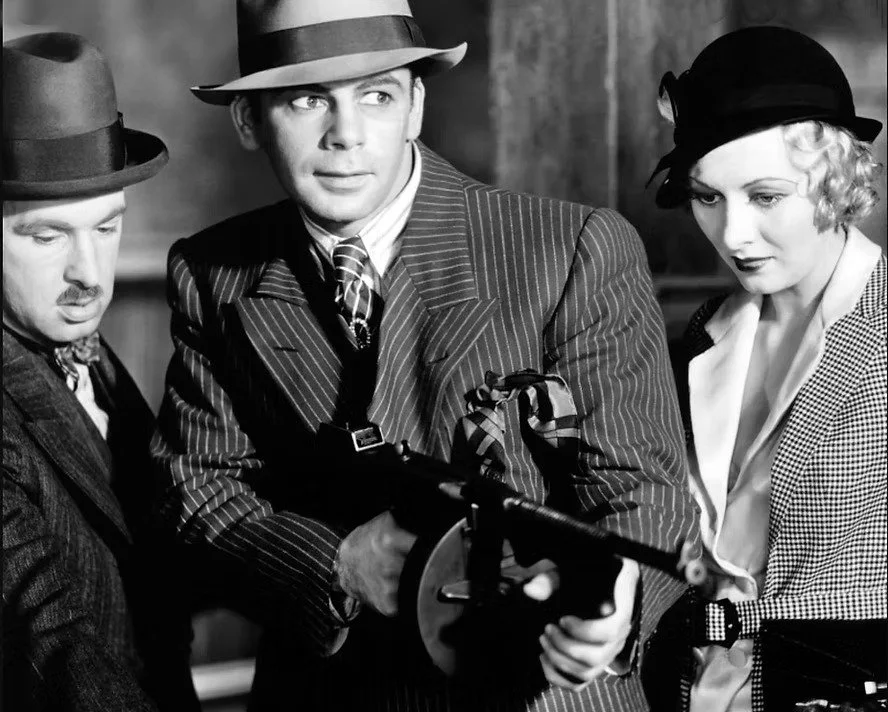
Still from Scarface (1932), Universal Pictures; this image is used for commentary purposes only, all rights belong to the respective copyright holders.
Understanding the Principles of Pattern Mixing
Much like colour, the key to pattern mixing lies in balance: ensuring enough contrast between each element so they enhance one another rather than compete. When considering patterns, it helps to focus on three visible elements—the jacket, the shirt and the tie—with the pocket square as a finishing note. Since trousers typically mirror the jacket, they rarely complicate the pattern equation unless you’re deliberately creating contrast for a special occasion.
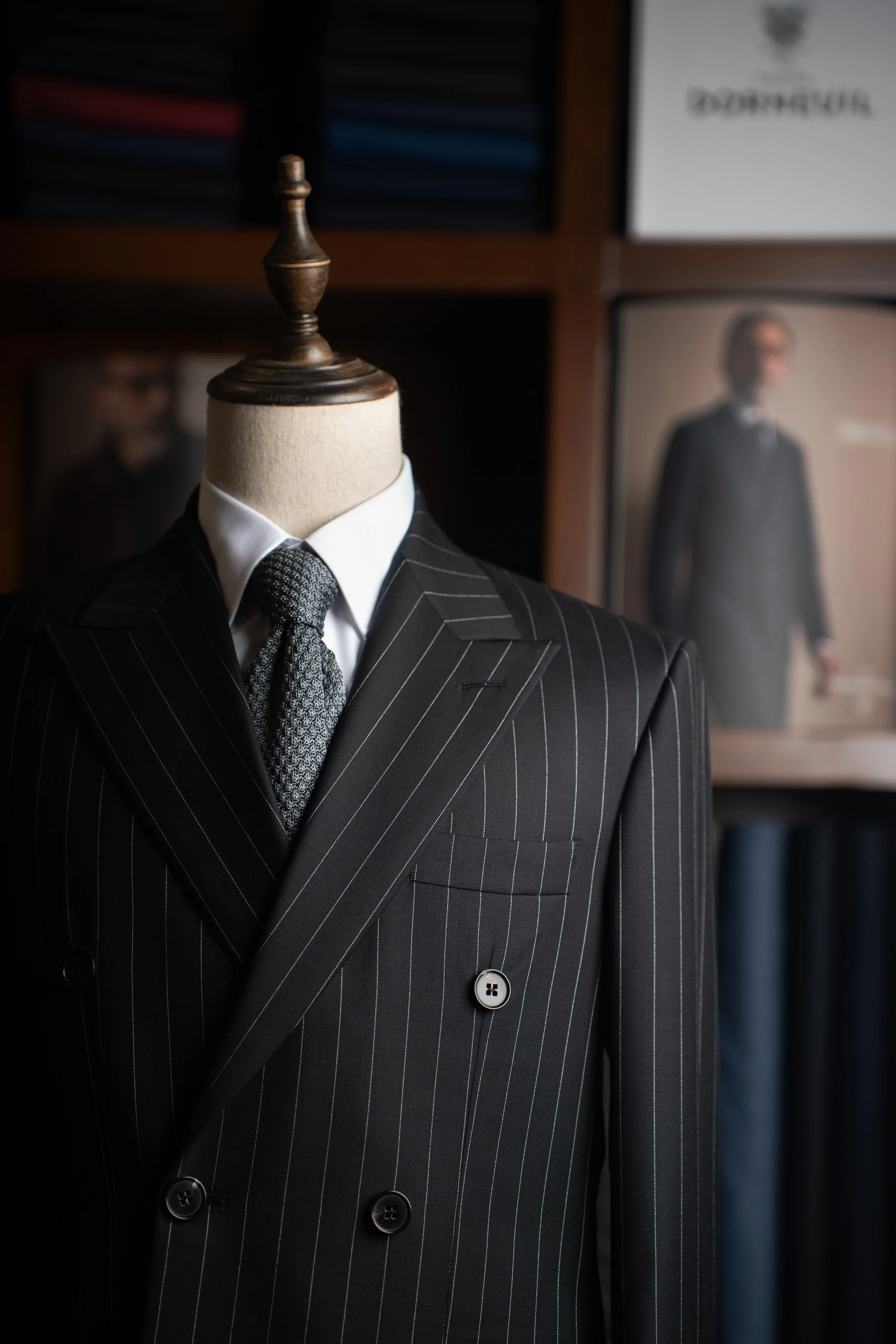
A Sein Shwe Bespoke tailored wide chalk-stripe suit jacket with a handwoven silk tie.
When combining like patterns (stripes with stripes, or checks with checks), variation is key. Stripes of different spacing, or checks of different scale, prevent the patterns from clashing or creating optical confusion. Too similar, and the effect can appear jittery or even comical.
When mixing different patterns (such as stripes with checks), the rule often reverses: here, aligning the scale creates harmony. For instance, if your suit jacket features a large check, a striped necktie works best when the spacing between its stripes is similarly distanced.Yet, as with most rules, exceptions exist. When one element carries an exceptionally small pattern—whether narrow stripes or tightly spaced checks—it is usually best balanced with a motif of larger scale to prevent visual discord: an extremely narrow striped suit jacket would require a necktie with a larger patterned motif.
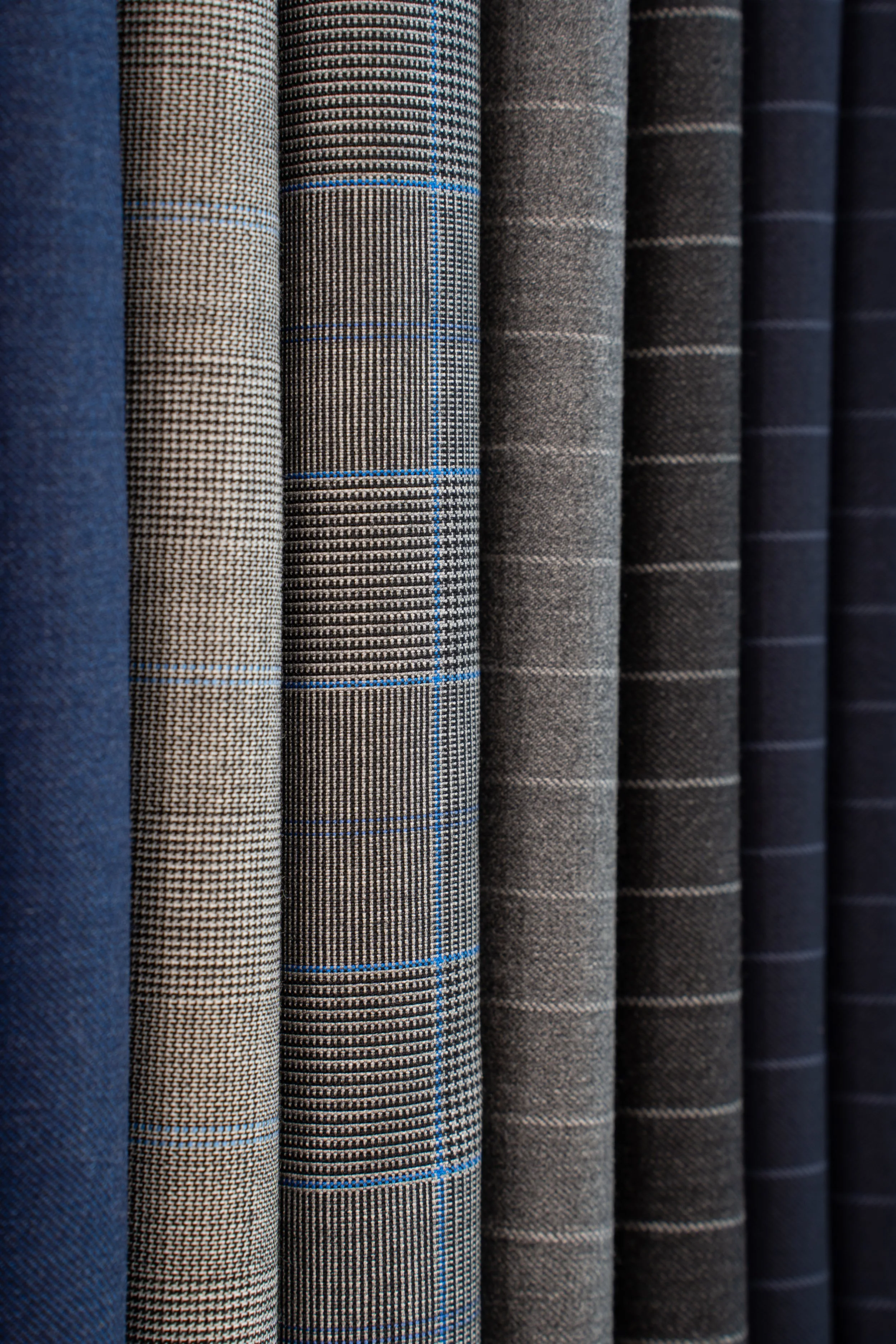
Of course, once you move beyond two patterns, the rules grow more nuanced. How would you combine two like patterns with a third that’s different? A jacket, shirt, tie and pocket square can each carry their own motif—yet with the right balance, even four patterns can coexist beautifully. The key is harmony, not excess, and tailoring tradition offers guidance that allows experimentation without chaos.
Once you move beyond two patterns, the rules grow more nuanced. How does one balance two similar patterns alongside a third that differs? A jacket, shirt, tie and pocket square may each bear its own design—yet with careful attention, even four patterns can coexist harmoniously. The essence lies not in excess, but in harmony, and tailoring tradition offers guidance that allows experimentation without chaos.
At Sein Shwe Bespoke, we guide clients through these subtleties, ensuring each element works together to create an ensemble that feels considered, confident and distinctly their own. Patterns, when chosen well, don’t just dress a man—they define their presence.